Thursday, August 26, 2010

Sequel to Drawn: The Painted Tower, and other thoughts!

Drawn Sequel

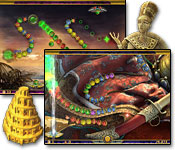
If any of you liked Drawn: The Painted Tower as much as I did, you might be interested to know that the sequel is coming. That's right. Go here to watch the trailer for Drawn: Dark Flight! w00t!

Recent Games

I've been trying a bunch of new games, to see if they're worth buying and reviewing. But I find myself unable to make up my mind about most of them. Perhaps you'll be willing to post a comment and add your own 2 or 10 cents? Echoes of the Past: The Castle of Shadows: I can't even get this game to work. It just black-screens. The same thing happened with Vacation Mogul, and I never got to try it. It would sure be nice if developers would iron these things out before the release date. Robin's Quest: A Legend Born: This game has sweet production values! It's lovely to look at and plays smoothly. But I have two gripes that are keeping me on the fence.
  1. In a culture where we have already feminized men beyond recognition, do we really need a game that casts Robin Hood as a woman, and gives her the brains and brawn to break out of jail and save her helpless husband from the same jail?
  2. There's not much challenge in the game. And I've heard others say that the game is a bit short. These are two heavy strikes against a purchase for me.
Enlightenus II: The Timeless Tower: The game looks pretty, just like the first Enlightenus. The game has the exact same music as the first game. In fact, it is almost exactly like the first game in every way. I was hoping for a little something different, but this sequel pretty much feels like a clone of the first game with different environments. Sure, the mechanics are still enjoyable, but with no significant changes to draw me in, I can't decide if it's worth a buy. Brunhilda and the Dark Crystal: Here, you get cartoony graphics that are reminiscent of The Curse of Monkey Island. The whole presentation is attractive, with satisfactory music, professionally drawn environments, and well-integrated seek-and-find mechanics. But it's the theme and story that don't interest me much. I don't know why. As much as I like the gameplay, the story doesn't make me want to keep going. Wedding Dash 4-Ever: While I haven't played this game, my wife has. And she's asking me to buy it. Wedding Dash: Ready, Aim, Love was one of her favorite games, and this sequel has once again earned her affection. So, if you like these sorts of games, you ought to give this 4th entry a try.

Wednesday, August 11, 2010

Strategy Guide - Royal Envoy!

Introduction

Royal Envoy is one of the most enjoyable strategic building games I've played (Read my review!). The goal of each level (besides completing your assigned tasks) is to earn the gold seal. This is accomplished by finishing all of your tasks before the timer runs out. On some levels this is easy to do. On other levels, it's somewhat challenging. But on some levels, it can be a real struggle, taking 3 to 5 attempts to figure out an effective path to success. The purpose of this strategy guide is to give you a step-by-step walkthrough for the levels that I found to be most challenging.

You might find some of these levels to be easy. Still, others of you might play levels that you think should be included here.

If you can't seem to find the path to the gold seal on a level that I haven't included, please post a comment on this article, and tell me which level you'd like a walkthrough for. I'll add a walkthrough for any requested levels.


Strategy Guide

Note about taxes: In all of the following walkthroughs, it is assumed that you will be collecting taxes from houses whenever you can, unless specifically instructed to do otherwise. The same goes for Banks.

Level 18

Note: Don't pay the pirate in this level.
  1. Build 2 three-star Cottages (upgrade siding first) in the center row, with a Lantern in between. It is important to keep working on these until they are complete. Don't collect any taxes from them until they're done. You want to keep your workers from going back to the Castle.
  2. Build 3 Cabins on the top row with siding and gardens (no other upgrades).
  3. Build a Lantern between 2 Cabins and a Flowerbed between 2 Cabins. At this point you'll be a little over half of the allotted time.
  4. Pay the balloon guy in the following order:
  5. 2000 (2 times)
  6. 500 (2 times)
  7. 100 (repeat until the scale is balanced)

Level 23

  1. Build a Sawmill next to the Castle.
  2. Process wood (800 at a time) at the Sawmill until you have 4800 materials.
  3. Process 200 wood at the Sawmill. You will now how 5000.
  4. Start construction on the bottom bridge.
  5. Buy 2 Tax Collectors and 1 Worker.
  6. Dig up 2 holes as soon as the bridge is complete.
  7. Start getting good deals at the Market (you're trying to collect 35,000 money). 50 for 3000 or 100 for 4000 are the best deals. Keep doing this as you proceed with the following steps.
  8. Once you have 35,000 money, pay the pirate.
  9. Dig up the hole.
  10. Trade with the merchants until you have 10,000 money. In the meantime, build the upper bridge and make sure you have 4500 wood in stock. You don't need to trade in the Markets anymore at this point.
  11. Pay the 2nd pirate.
  12. When the smoke clears, build a Statue between the Cabins.

Level 26

  1. Build 2 Chalets with siding. I put them on the right and left sides of the Castle.
  2. Build Cottages with siding in all other slots.
  3. Begin paying the pirates whenever you have 3000 money.
  4. Add a garden to each building.
  5. Use your remaining wood to upgrade any houses you can. I focused on the Chalets.
  6. Once you have 7000 money, pay the last pirate.

Level 32

  1. Start producing in the Workshop.
  2. Clear all brambles.
  3. Build a second Workshop right next to the other Workshop. Keep them constantly producing.
  4. Build a Villa under the Circus.
  5. Upgrade the Villa all the way, with siding, but no garden.
  6. Complete the bridge.
  7. Build Cabins with siding in every remaining slot.
  8. Restore the Circus and start running festivals. Keep running them as you proceed. Eventually you will finish the level.
  9. Buy Tax Collectors until you have 7.
  10. Keep collecting taxes and producing materials in your Workshops.

Level 35

  1. Build a Sawmill in the middle row, middle slot.
  2. Add siding to all Villas as soon as you've collected taxes once.
  3. Process 800 wood at the Sawmill once you have enough money.
  4. Process 400 wood at the Sawmill once you have enough money.
  5. Build a Workshop in the middle row, next to the Castle. Keep the Workshop constantly producing.
  6. Keep constantly processing 400 or 800 wood in the Sawmill.
  7. Buy 3 Workers as you go (for a total of 6).
  8. Build Chalets (with siding) in the empty slots in the top and bottom rows.
  9. Demolish the Villa in the middle row.
  10. Build a Bank in the middle.
  11. Demolish Villas on the top and bottom rows.
  12. Build Chalets with siding on the top and bottom rows.
  13. Demolish the Sawmill and build a Market in its slot. You can use the market to help you get the 10,000 money needed to pay the pirate.
  14. Pay the smoking pirate.
  15. Build a fountain.

Level 37

  1. Build a Workshop in the middle row.
  2. Clear all brambles.
  3. Demolish the Fountains and Flowers.
  4. Produce in the Workshop constantly.
  5. Build 2 Villas in the empty slots.
  6. Add siding to both Villas, and upgrade them to 3 stars.
  7. Collect taxes until you have 15,000 money.
  8. Pay the pirate.
  9. Add siding to the Villas on the bottom row.
  10. Pay the other pirate.
  11. Demolish both middle Villas.
  12. Add siding to the Villas on the top row.
  13. Build 2 Banks in the middle.
  14. Build a Flowerbed between 2 Villas, and Flowers between 2 Villas.
  15. Upgrade 2-star Villas to 3 stars.
  16. Buy extra tax collectors (for a total of 6).
  17. Keep emptying the Banks.

Level 38

  1. Clear out the right side first.
  2. Restore 2 Markets, and build a Sawmill at the bottom as quickly as possible.
  3. Spend the rest of the time clearing brambles, digging up holes, restoring Markets, building Markets doing trades, and buying 800 wood at the Sawmill.
  4. Note: Only do Market trades of 3000 for 50, or 4000 for 100.
  5. Once all Markets are restored, build the three flowers. Each flower costs 450 wood. Once you're down to the last flower, use the Sawmill to process whatever amount you need, even if it's just 200. You should finish just before the timer runs out.

Level 56

  1. Send out all Workers to clear the brambles. Start with the buildings on the sides of the Castle. Then, focus on the bottom. You want to quickly clear paths to the Bank, and to the empty lots in the middle. Then, get to the middle lots in the top row. Then, clear out the rest. You'll still be clearing brambles while you carry out the steps below.
  2. Build a Sawmill one one side of the Castle. As soon as it's built, buy 1600 wood.
  3. While you're waiting for the Sawmill, buy Workers. You'll want 9 total.
  4. Build a Workshop on the other side of the Castle as soon as your Sawmill worker delivers the wood to the Castle.
  5. As soon as your Workshop is built, demolish both Dragon Statues.
  6. Keep your Workshop constantly running.
  7. Start building Mansions with siding in every slot. Start with the slots closest to the Castle, and build out from there.
  8. Whenever you have enough money, buy 1600 wood from the Sawmill. Keep checking periodically.
  9. Whenever the Bank has 4000 gold available, send a Tax Collector to pick it up.
  10. Once all Mansions have been built, start adding Gardens to each one.
  11. Build 5 lanterns.

Level 57

There are a number of ways to finish this one with the gold seal, but only in the nick of time. I played it over and over, trying to find the quickest method. I finally found a way to get the gold seal while your timer is still above the little metal bar near the bottom of the time meter.
  1. Demolish the Market. This gets you lots of materials.
  2. Start collecting rent right away.
  3. As soon as you have enough money, start buying Workers. Keep buying them as you play, until you have 10.
  4. As soon as your Workers bring back the materials from the demolished Market, start running your Workshop, and keep it constantly running.
  5. Put siding on your Mansion as soon as you can.
  6. Put siding on all of your other houses.
  7. Collect money from your Bank regularly.
  8. Start buying Tax Collectors, and keep buying them as you play, until you have 10.
  9. Buy 400 materials at the Sawmill.
  10. Once you have 2000 materials, build a Workshop next to the Bank. Keep it constantly running.
  11. Note: If you need to, you can occasionally buy 400 or 800 materials at the Sawmill to help you build all of the stuff in the following steps. You should count mostly on your Workshops though.
  12. Start upgrading your Mansion until it has 3 stars.
  13. Build a Mansion with siding in one of the bottom corners.
  14. Build a Bank in the other corner. Keep collecting from it regularly.
  15. Add Gardens to 5 houses. Only add a Garden to one of the Mansions.

Level 58

  1. Build 3 Villas with siding.
  2. Construct the bridge.
  3. Upgrade all Villas to 1 star.
  4. Collect money continuously from Villas and Banks.
  5. Pay the bandit once you have 30,000 money.
  6. Clear the brambles.
  7. Send Workers to dig up both holes at the top.
  8. Buy 5 Workers.
  9. Build a Workshop next to the Castle as soon as you have 2000 materials. Keep the workshop running.
  10. Buy 1,600 materials at the Sawmill whenever you have 16,000 money.
  11. Each time you have 1,200 materials, demolish a Bank and build a Mansion with siding.
  12. Once you have built 3 Mansions, add Gardens to all 6 houses.

Level 59

  1. Start building a Workshop in the empty space at the bottom. Once it's built, keep it running.
  2. Clear all 4 brambles.
  3. Dig up the hole at the top.
  4. Demolish all 4 Villas. You may want to collect money from them first, if it's available.
  5. Build 4 Chalets with siding.
  6. Buy 2 Workers.
  7. Upgrade all Chalets to 3 stars and gardens.
  8. Pay the pirate when you have 20,000 money.
  9. Build 4 Chalets with gardens in the spaces on the right side. Hopefully none of them will need repairs in the short time it will take to complete these. If they break, repair them.

Level 60

  1. Send all 5 Workers to the cave. Leave them there the rest of the time.
  2. Collect the money from all 3 Banks.
  3. Buy 1 Worker.
  4. Start constructing the bottom bridge as soon as you can.
  5. Clear the brambles when you're done.
  6. Buy 1 Worker.
  7. Start constructing the middle bridge.
  8. Clear the brambles when you're done.
  9. Buy 1 Worker.
  10. Start constructing the top bridge.
  11. Clear the brambles when you're done.
  12. Start buying Workers until you have 11.
  13. Send a Worker to dig up the hole next to the cave.
  14. Build a Mansion with siding in every empty slot.
  15. Keep upgrading the 3 Mansions until they all have 3 stars.
  16. NOTE: Remember to keep your Tax Collectors constantly collecting money from the Mansions and Banks.
  17. Start paying the pirates whenever you have 10,000 money.
  18. Clear the brambles each time you pay a pirate.
  19. Buy 1 Tax Collector (you'll have 4 total).
  20. Buy 1 Worker (you'll have 12 total).
  21. Once the brambles have all been cleared, build Mansions with siding in all 3 slots.
  22. Build Statues between all Mansions.
  23. Upgrade all Mansions to 3 stars. Eventually you'll reach 300,000 money and win with time left.

Level 61

  1. Demolish the broken Cottage.
  2. Build a Villa with siding, and upgrade it to 1 star.
  3. Add siding to the Chalet and the Cottage, and upgrade them both to 2 stars. You should be left with 100 wood.
  4. Dig up the hole behind the Castle.
  5. As soon as you have 7,000 money, pay the pirate. You should have used just over 1/4 of your time at this point.
  6. Start running the Workshops and keep them going.
  7. Dig up the hole at the top of the screen.
  8. Save up about 60,000 money.
  9. In the meantime, build lanterns in the 4 available slots.
  10. Demolish 1 Workshop.
  11. Build a Sawmill where the Workshop was.
  12. At the Sawmill, run 3 batches of 1600 and 1 batch of 800. Then demolish the Sawmill.
  13. In the meantime, add a garden to the 3 houses on the left.
  14. Build a Cabin where the Sawmill was. Don't build siding.
  15. Add a garden to the new Cabin.
  16. Once you have at least 10,330 wood, fix the bridge.
  17. Demolish the second Workshop.
  18. Build a lantern in the slot across the bridge.
  19. Build a Cabin where the second Workshop was.
  20. Add a garden to the new Cabin.

Level 62

  1. Repair both Villas on the right side, and add siding right away.
  2. Upgrade both Villas to 2 stars.
  3. Keep collecting taxes whenever you can.
  4. Chop up the brambles in the middle.
  5. Build 2 Villas with siding in the bottom two slots. You can upgrade them to 1 star if you like.
  6. Pay 5000 money to the pirate blocking the Bank. Keep collecting money from the Bank whenever you can.
  7. Pay 10,000 money to the pirate blocking the Workshop. Keep the Workshop running all the time.
  8. Pay 20,000 money to one of the smoking pirates at the top.
  9. Demolish the revealed Statue.
  10. Pay 20,000 money to the other smoking pirate.
  11. Demolish the revealed Statue.
  12. Buy 2 Workers (for a total of 4).
  13. Build a Statue between one set of Villas.
  14. Pay 15,000 money to the pirate blocking the Market.
  15. Add gardens to all Villas.
  16. Demolish the Market.
  17. Build a Sawmill.
  18. Build a Statue between the other set of Villas.

Level 63

  1. Begin clearing out the brambles. You want to gain early access to the bottom middle slots and the two side slots.
  2. Build a Sawmill in one of the lower middle slots as soon as you can. Keep producing 1600 wood whenever you have 16,000 money.
  3. Buy 3 workers (for a total of 8).
  4. Build a Mansion with siding in one of the side slots. Start upgrading it to 3 stars.
  5. Build a Workshop in the other bottom middle slot as soon as you have enough wood. Keep it running all the time.
  6. Build a Villa with siding on the other side slot. Start upgrading it to 3 stars.
  7. Build a Bank in one of the bottom side slots. Keep collecting money from it.
  8. Remember to produce 1600 wood whenever you have 16,000 money.
  9. Remember to keep collecting taxes and Bank money whenever you can.
  10. Build a Chalet with siding in one of the top slots. Start upgrading it to 3 stars.
  11. Build a Cottage with siding in one of the top slots. Start upgrading it to 3 stars.
  12. Build a Cabin with siding in the remaining top slot. Start upgrading it to 3 stars.
  13. Build a Garden for each house.
  14. Build a Market. Don't do any trades there.
  15. As soon as you have enough wood, build the Statue and 2 Lanterns. This will probably require you to run 400 wood at the Sawmill to achieve the gold time.

Tuesday, August 10, 2010

Review - Royal Envoy!

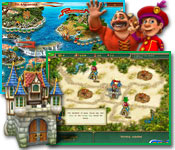
Where have all the great games gone? A lot of my favorite games are older ones (which means 1 or 2 years old in the casual games world) because the commitment to quality seemed to be generally higher back then. And yet, every so often, a developer will surprise me. Today, I review a new game that surprised me in a number of ways - a game that puts you in the role of the king's Royal Envoy!

What I liked

  • Superb graphics
  • Unique spin on the genre
  • Good music
  • Satisfying game length
  • High degree of polish
  • Perfect amount of challenge
  • Stays interesting
  • Subtle humor

What I didn't like

  • Character art

Quick Plot

Help to restore safe homes to the realm of Islandshire before the rainy season hits again!

Mechanics

Strategy: There aren't many casual games that immediately strike me as "strategy games." It wasn't long before I discovered Royal Envoy to be just that. Many building games offer some degree of strategy, but not like this game does. In your typical building game, such as the Build-a-Lot series or the Be Rich series, your goal is to finish the level within the allotted time. If you don't succeed, you have to play the level over. If you finish the level very quickly, you get an Expert rank. But in these games, the Expert goal is something extra to reach for, if you prefer the challenge. In Royal Envoy, all of the fun is tied into getting the equivalent of the Expert goal. It feels very similar to the Farm Frenzy games. In those games, half of the fun is in trying to figure out the particular sequence of actions that will earn you the Gold medal. That is exactly how Royal Envoy plays out. The developers have given a challenging, but reasonable, timer to each level. When this timer runs out, it just disappears and you can keep playing. But if you finish the level before the timer is out, you get the gold seal.
Pirate Island, with gold seals on all levels, as indicated by the stars.
So what's the point of achieving the gold standard? There are three benefits:
  1. The gold seal earns you lots of bonus points, which can earn you a higher rank, which earns you trophies.
  2. To unlock expert mode, you must complete all levels with a gold seal.
  3. Achieving gold is very satisfying, mentally. It's a sign of good strategy.
It's very obvious that the designers intended it to be this way. I don't even know if you can lose a level. I suppose you could get stuck without enough resources to continue, and be forced to restart a level. Strategic tips are offered between levels. These tips give helpful advice for achieving the gold seal. I think you'll find that a dominant portion of the fun is found in
  1. starting a level,
  2. looking over the level's goals, and
  3. devising a strategy for gold-seal success.
The timer doesn't begin until you give a command to a worker or tax collector (I'll explain these guys in a minute). So you can look over the level and its requirements with no time pressure. This allows you to study the level in advance, and to map out your plan of execution. Building: Once you have your strategy for a level, you begin building. This is similar to many other buildings games, in the tradition of Build-a-Lot. There are a number of slots on the screen where buildings or decorations can be constructed. Your objective is to meet the level's prescribed goals by
  • building (or tearing down) the appropriate buildings
  • in the best order
  • as quickly as possible.
You have two kinds of hirelings to serve you:
  • workers, and
  • tax collectors.
Workers do all the manual labor of building, chopping, digging, producing and demolition. Tax collectors are the little fellows who run to money-producing buildings to collect income. They also carry out negotiations with pirates and merchants. Workers and tax collectors live in the castle. The castle is the central building where all money and materials are dropped off after being collected. You can also hire extra workers and tax collectors in the castle. This costs money. Money and materials (wood) are the two resources you'll be working with. You collect both resources in a number of ways, and they are both used for multiple purposes.
How a level looks. At the top you can see money, materials, workers, tax collectors, and happiness.
Now, let me explain all of the buildings and their functions. You have 3 types of things you can build, and they don't have names (just images) so I'll classify them as houses, decorations, and resource buildings. The 5 types of houses, from smallest to largest are:
  • Cabin (makes the least money)
  • Cottage
  • Chalet
  • Villa
  • Mansion (makes the most money)
The 4 types of resource buildings are:
  • Sawmill: You pay money to receive materials.
  • Workshop: You pay materials to receive 10x more materials).
  • Market: You sell materials to receive money.
  • Bank: Accrues money every time you collect taxes. Money can be withdrawn.
There are 5 types of decorations. They add happiness to adjacent houses. The more expensive the decoration, the more materials you must spend to build it, and the more happiness it adds. (Incidentally, the most expensive decoration, the Statue, is a statue of the Playrix dragon. Playrix is the game's developer.) Every so often you can gain resources by other means, such as digging up buried treasure or chopping up brambles.
Every type of building. Top row: houses. Bottom row: resource buildings and castle.
Time Management: This is worth mentioning because the game is really a time challenge, if you play it as I've described earlier. You're trying to achieve goals as quickly and efficiently as possible. Still, for those of you who like the building aspect, but don't like racing against a clock, you can ignore the clock and go at your own pace. You just won't achieve the gold seal on each level, which is okay.

Highlights

Eye candy: How refreshing to play a game that bathes you in highly-polished graphics. The developers overlooked nothing in the graphics department. With the exception of the cut scenes, I was completely pleased with the game's visuals.
Each level is vividly colored, with animated scenery and highly detailed objects. I sat and admired the map of Islandshire for the pure fun of it. A series of pretty little islands is situated on a large expanse of sea. The rolling waves are gloriously colored, and each island has special animations that play when you mouse-over or click on it (once you've finished the island). You can see whales jump out of the water while the best music track of the game plays. The map spans beyond the edge of the screen, and when you scroll to the side, a navigator's wheel spins. It's wonderful. This is the sort of thing that really draws me in and begs me to keep playing the game. I thank Playrix for putting this kind of effort into the visual aesthetics.
The map of Islandshire. I wish I could live there.
Music: You know I'm almost always disappointed with the soundtracks for casual games. With a few qualifiers, I'll tell you that I did like the music in this game. Let me explain. There are 4 kinds of game soundtracks:
  1. Those that are so bad that you just turn the music off in the settings.
  2. Those that aren't great, but get the job done, so you leave the music on.
  3. Those that really help the game and sound good when playing, but don't hold up when listened to outside of the game.
  4. Those that are so good that you'd gladly listen to the music on your iPod.
Royal Envoy has a #3 kind of soundtrack. I really liked it in the game, but isolated on its own, it doesn't hold up. Also worth mentioning is that the music style surprised me. The game has a medieval sort of theme, with castles, men in livery, and wooden ships. And yet the soundtrack sounds like it would be more at home in a Build-a-lot game. I was expecting something more like the Be a King 2 soundtrack. But nope! You can expect a happy, modern style. And yet it works. After I got used to it, I happily hummed along while playing. Game length: One thing that really makes any game disappointing is too short of a length. I'm glad to say that Royal Envoy has the perfect length. You'll feel like you got your money's worth by the time you're done. The game has 60-something levels, all satisfying. If you complete the trophy room, you unlock Expert mode and have a chance to replay all the levels with even more challenging time limits. Humor: The game is cartoony, cute, and funny in its delivery. In between levels and when you complete islands, you'll view dialogue between characters. I laughed out loud when one character said: "What a skinflint! The owner of the balloon refuses to let us have it for free." That quote left me snickering for days.
An example of character art in a cut scene.

Issues

Cut scenes: Each time you finish an island, you view another plot-advancing animated cut scene. Personally, I thought the art style in these scenes was unattractive. All of the character art (with the exception of the girl) seemed strange to me. The animation was kind of awkward, too. Although, I will say that the voice work was good. They obviously hired experienced voice actors. Other than that, I can't think of any other gripes.

Suitable for the family?
Everything in here is cute, so you don't need to worry about any offensive or disturbing content. I was surprised to find that my kids actually liked watching a building game such as this. What they really liked were the little workers and tax collectors running around, and the beer-gut pirates. My little people gladly stood watching. They even helped me keep track of things I needed to keep an eye on!

The family man's final ruling

This was one of the best games I've played in a while. So much effort went into making it a polished product. The game is worth more than you're likely to pay for it, I think. The levels are all unique, always offering a strategic challenge. The graphics and music support the gameplay with a high-quality delivery. The game kept me interested right up until the end. Virtually every time you mouse over something in the game - buildings, people, trophies, islands - you'll get some interesting animated response. When you get to a level with a cave, try moving your mouse in front of the cave and see what happens! This is as good as casual games get. It's right up there with games like Luxor: Quest for the Afterlife and Ancient Quest of Saqqarah in terms of production quality. If you like building games at all, don't pass this up. The emphasis on strategy and resource/worker management gives it a completely different feel from other games in the genre. I would gladly play a sequel! By the way, I'm going to be writing up a strategy guide for some of the most difficult levels in the game, detailing a method for achieving a gold seal on each level. So keep an eye out for that. You may find it to be helpful if you get stuck on tricky level!
The best way to fill out the trophy room is by achieving gold seals on levels!

You'll like the game if...

  • You like building games
  • You like time management games
  • You like strategy games
  • You like colorful, cartoony games

You won't like the game if...

  • You don't like having to do a bit of strategizing
  • You don't like economic/building games
My rating:

Saturday, July 17, 2010

Review - Simplz Zoo!

Early this year, Reflexive Entertainment released a match-3-based zoo-building game called Simplz Zoo. As you may know, I don't usually enjoy match 3. Intrigued by the glowing feedback others have given for Simplz Zoo, I took a risk and purchased the game, then played it all the way through. It's review time!

What I liked

  • Significant and practical match 3
  • Zoo development
  • Optional time limit for match 3
  • Upgrades and bonuses

What I didn't like

  • Art style
  • Music
  • "Indoor" animal exhibits
  • No ending?

Quick Plot

Develop your zoo and rise up to become the #1 zoo in the world!!!

Mechanics

Match 3: This game uses your generic swap-style match 3. But one really nice feature is that they allow diagonal swaps. (Thank you, Reflexive). Your goal is to swap 2 pieces on the square grid and make straight matched strings of 3 in a row or more. The biggest match you can make is 9 pieces - and you'll actually earn a trophy for accomplishing this in the game. Each match you make earns you resources. A level ends once you've
  • collected all of the required resources, and
  • directed animals along a path to an exit square, and/or
  • moved some pieces all the way to the bottom of the puzzle border.
Resources include things like materials, food, money, personnel, and research. Each time you make a food match, you earn food, and so on. As you go on, levels get more difficult by adding locks on some squares, which are broken by including them in matches. Also, certain squares will have pathway pieces behind them (these are used for building paths in your zoo). Clearing these squares is required to finish a level. Early in the game, you just need to make one match on such a square to clear it. Later, you might have to clear 2 or 3 pathway pieces from a square. Whenever you make a match of 4 squares, a bonus will be added to 1 square on the board. That might be something like extra money or zoo points. When you break that bonus square, you get the bonus. So matches of 4 are good. Matches of 5 don't give bonuses, but I think they get you more resources or something.
The zoo development interface. Clicking the big PLAY arrow starts the next match 3 level.
Zoo-building: After a level, if you have enough resources, you can build or upgrade buildings and exhibits in your zoo. The zoo-building feature serves the following 4 purposes:
  • it can be fun to look at, and it's somewhat educational (learn scientific animal names),
  • it allows you to be creative with your own personal zoo design,
  • buildings give you upgrades and bonuses for the match 3 levels, and
  • adding animals to your zoo is what takes you up the ranks to become the #1 zoo in the world.
To build buildings, bring in new animals, or maintain your zoo, you need resources, which I explained earlier. Each time you upgrade a building, or add something new to your zoo, you'll get some extra feature in your match 3 levels. This includes things like
  • better versions of a resource (Example: Each materials match will bring you 9 materials instead of 3.)
  • tools (Example: If you click the monkey tool, it will randomly rearrange pieces on the board.)
  • 3-in-a-row bonuses (Example: If you get 3 research matches in a row, a number of locks will break.)
  • special effect pieces (Example: If you move the water piece, the bottom two rows of the board are cleared. The water piece appears randomly once you've purchased a hippo.)
You're given objectives before each match 3 level.

Highlights

Meaningful and practical match 3: What bothers me about most match 3 games is that all of that work swapping squares, or dragging the mouse across a chain of hexes
, serves little purpose. It's just a tedious exercise in finding possible matches. Simplz Zoo gives significance to the match 3 levels. As you make your matches, you have goals in mind. You know that making 3 matches in a row, of the same resource, will offer a beneficial effect on the board. You know that you have powerful board-changing tools charging up to be used at the right time. You have meters at the top of the screen showing you how many more of each resource you need. Sometimes, you need to clear a path for an animal. Sometimes you need to get pieces to the bottom of the match-3 frame. All of this makes the match-3 experience practical. You are maintaining and expanding your zoo by playing the levels in a particular way. As the game progresses, more and more features are added to the match-3 levels. This provides variety and makes the levels more interesting.
Zoo development: I liked that this game had something secondary to work at, and not just an unbroken string of match-3 levels. The developers were clever in giving you goals to work for. The ultimate goal is to become the #1 zoo in the world. The problem is, you start off way at the bottom, working to make it into the top 1000. If you want to become the #1 zoo, you've got your work cut out for you. And if you want to develop your zoo, you need exhibits and other important zoo facilities. To build those, you need to gain resources. To gain resources, you need to play match 3. So that's how they make the game interesting. The zoo development is the driving force that gives significance to everything you do. Optional time limit: If you prefer the challenge, you can decide before each level if you'd like to have a time limit. If you don't finish the level's objectives before the timer runs out, you lose and have to try again. If you finish the level with time left, you get bonus points of some sort. I kept the time limit on for a few levels, but then it quickly became too difficult to beat the levels. I preferred taking my time and working to gain lots of resources, rather than racing the clock. So I turned off the time limit for most of the game. I'm so glad they made this optional.
Upgrades and bonuses: Bonuses are to games what sauce is to food. The right sauce can bring any meal to life. Similarly, a game may have swell mechanics, but if you can get helpful boosts in the form of upgrades, it enhances the gaming experience to make it all the sweeter. This game is loaded with such add-ons. As I've explained already, these bonuses exist in both the zoo-building and match-3 portions of the game. They serve as both goals and helpers. They make the game dynamic, and that keeps us playing.

Issues

Production values: This is a game that manages to get away with low-detail graphics and merely adequate music because the gameplay is good. I don't mean the graphics are grainy or poorly crafted. I just don't like the art style. It's too "simplz" for me. The cartoony style lacks depth. It gets the job done in a cute sort of way, but doesn't dazzle on any level. The best graphics in the game are those in the match 3 levels. The pieces look cool, and when you make matches, little purple lights shoot all over the place. The music is just.........mediocre, like most games on the market. The composer obviously understands some things about music, but like the graphics, the soundtrack is too simple. I think this is the first game where I actually turned the music completely off for most of the game. But, hey, it's a matter of taste. You may like it, but don't say I didn't warn you.
That's a musk ox. And he's chewing bubble gum.
Indoor exhibits: Part of the fun, when buying a new animal for your zoo, is seeing the animal walking around. You want to watch the beast you purchased - it seems a fair reward for the work you did to earn it. But for some reason, the developers didn't want to go the extra mile and actually animate every animal in the game. So they created a huge list of exhibits that house 4 animals each. These exhibits show up in your zoo, but the animals don't. You can see images of the animals on the screen where you buy them, but you don't get to watch them moving around their environment. This was disappointing for me, but even more so for my kids, who wanted to observe each animal in action. They were asking me to "go in" to the Carnivore Cubbyhole exhibit, and I had to inform them that I couldn't. Was it really that complicated for the developers to make all animals observable? No ending?: If you've read my reviews before, you know that I like good endings. I feel like developers owe it to the player - a final payoff for completing the game, a 5- to 20-minute closer for the story. I don't think this game has an ending, but I'm not certain. I achieved the #1 zoo rank after 85 levels of match 3, and then played a few more for no particular reason. That completed my bulletin board (which serves as a sort of trophy room). I had nothing else to work for, but I could continue playing levels and decorating my zoo with flowers and benches and such, should I care to. So, if I played 100 levels, would I get an ending then? I may never know. If you discover an ending, please comment on this post and let me know.
You get to see your zoo ranking after each level, as your resources are tallied.

Suitable for the family?

If you're looking for a game that kids will like, this game fits the bill.
  • Animals galore - check!
  • Cute - check!
  • Educational - check!
There is really no story here, but plenty of light-hearted, zoo-themed, family-friendly gameplay.

The family man's final ruling

I'm not a fan of match 3. And yet I liked this game. I had fun each time I sat down to play, and the kids gladly stood by. They were pleased with each new animal I freed on the match 3 board, and each new animal I added to my zoo. The audio and visuals were nothing special, but the gameplay was clean, and professionally delivered. Multiple goals kept the game interesting. This is probably the most fun I've had with swap-style match 3.

You'll like the game if...

  • You like cute games
  • You love animals and zoos
  • You like swap-style match 3

You won't like the game if...

  • You're opposed to all match-3 games
  • You avoid cute, happy games
My rating:

Wednesday, July 7, 2010

6 new games I tried . . . but didn't buy

One of my goals is to find the best games on the casual market, and then to share them with you in reviews. To find games worth playing and reviewing, I have to try a lot of games. Much of the time, you don't hear from me about the games I don't like, or the games that were only kind of fun. So, occasionally, I like to catch you up on some games that weren't worth buying for one reason or another. In order of release date, here are 6 recent releases that I tried but didn't buy. Ranch Rush 2: When I saw how much love this game was receiving from the casual game community, I decided I had better try it. You play a farmer girl who has to run around planting seeds, and loading up boxes with harvested plants. You will also need to deliver your harvested goods to the barn and water your plants. There are a few other time management games that have very similar mechanics. I'm glad that I tried this game because it reminded me that there is great variety within the time management genre, and not all types are equally fun for each person. Many of my favorite games are time management games. But this game confirmed that I don't enjoy this particular brand of time management. I'm not sure why. Thinking about it, I realize that my pattern is to avoid time management games in which you send some character dashing about. I almost always prefer a 1st person perspective (I did enjoy Mystic Inn, for example). Ranch Rush 2 didn't offer the type of challenge that I like. The planting, harvesting, and delivering, as presented here, felt boring. You might love the game, but I bailed after a short time. World Mosaics 3 - Fairy Tales: This is a puzzle game. And I wish I could own it . . . without paying for it. The "mosaics" you build are "paint by numbers" (or nonogram) puzzles. You have to use your logic skills to figure out which squares in the grid are filled, and which ones are empty. When I first played this sort of puzzle years ago, a completed puzzle ended up with a random array of filled squares at the end. But this game manages to make a picture out of each puzzle by adding a bit of color to the completed image. This plays just like the previous World Mosaics games, but this time, the theme is fairy tales. I love this sort of logic puzzle, and I had a great time playing through the first chunk of this game. But I just can't bring myself to pay for it. The presentation is attractive, and the soundtrack was surprisingly good this time around (if short in length). But at the end of the day, it's just a collection of paint-by-numbers puzzles, and the miser in me doesn't want to throw cash at a puzzle collection. But if it was free, I'd grab it right up! Midnight Mysteries 2 - The Salem Witch Trials: Here was me playing this game: "Hmm. This looks interesting enough to try." [downloads game and begins playing] "Okay, let's see. I need to find all of these items..." *yawn* [plays through the first scene] "Hey, a ghost showed up to talk to me." *yawn* [bails and uninstalls game] My opinion is that if you're going to design a HOG these days, it had better be pretty special. This new entry in the Midnight Mysteries series offered nothing to keep me interested. If you want more of the same mundane gameplay found in almost every other recent HOG, then you should try this game. The graphics are nice, and the interface is pretty good, but zzzzzzzzzzzzzzzzzz..... Little Space Duo: We get very few space-themed games in the casual world, so I pay attention when such a game is released. When I saw the intriguing screenshots for this one, I downloaded it right away and dove in. Not only were the controls and interface a bit tricky to get used to, but I couldn't even figure out how to pass the first level. I know I'm not a genius, but assuming the game gets even more complicated in later levels, one would hope that the first level would be relatively easy. The story was fair, as were the graphics. So I'll just keep looking forward to the day when some clever developer releases that superb space-themed game I'm waiting for. Be a King 2: Now this is a game that I would gladly nab, if the price was right. This is a building/strategy game. I typically really enjoy this sort of game (my favorite being Coconut Queen). It has a little bit of that Warcraft III flavor (with shooting towers and invading hordes). The graphics are very nice, the music is fair, and the production is nice overall. So why didn't I buy it? It doesn't seem to offer anything.....special. It was released on the heels of Royal Envoy, which is similar, but has something special to offer. The game is good, but not necessarily worth buying, until you've finished the other games you're more interested in. Still, this is an incredibly good production, considering the tiny development team. Would I buy it as a daily deal for $2.99? Maybe. Probably. Flux Family Secrets - The Rabbit Hole: This is a weird one for me. On one hand, the interface, graphics, and gameplay are all very nice. On the other hand, it violates one of my personal values, namely, the objectifying of women. This issue is rampant in the world. Everywhere, the image of the female form is used as a tool and a marketing gimmick. Within the first several minutes of this game, the female form was used twice - once in the form of a character drawing, and once in the form of a statue. Otherwise, the production is very good, and would like to see more games in this style. From what I saw, it included hidden objects and puzzles. I didn't see anything particularly innovative, but the presentation was on the high end of the quality scale. So there you have it - 6 new games I tried but didn't buy. You may wonder if I've liked any new games. Yes, I have, and you'll be hearing about them before too long.

Thursday, July 1, 2010

Review - Luxor: Quest for the Afterlife!

A while back, I reviewed the Egyptian-themed marble popper game, Luxor 3. The game had many outstanding features, and it remains one of my favorite games to this day. When approaching the next game in the series, I wasn't sure what to expect. It could be better, the same, or worse. But which? That's what I'll tell you today in my review of Luxor: Quest for the Afterlife!

What I liked

  • Amazingly polished production
  • Soundtrack
  • Graphics/Scenery
  • Upgrades
  • Theme/Setting
  • Good momentum

What I didn't like

  • No clues for obtaining treasures
  • Uninteresting story
  • Different balls are only for looks

Quick Plot

An Egyptian lady is worried about something having to do with canopic jars and she's trying to figure out who is behind her troubles. She's worried about the afterlife, I think. (I skipped the story segments after the first couple because they just didn't interest me.)

Mechanics

Marble popping: As with all other Luxor games, this 5th entry is a sphere-shooting game. Your shooter slides back and forth across the bottom of the screen. It always has marbles of two colors to choose from. You right-click to switch between these two marbles. A chain of marbles comes rolling onto the screen. Your job is to launch marbles into these chains to create groups of 3 or more of the same color. When you fire, say, a green marble into a group of 2 or more green marbles, that whole group breaks and the chain automatically fills in the gap. If a chain enters the temple (exit) at the end of the marble path, you lose the level. So you need to destroy each chain completely before it enters the exit. When you make 3 breaks in succession, "drops" fall down. These are power-ups and treasures. The power-ups and treasures in this game are exactly the same as those in Luxor 3. (I wrote about them in detail in my Luxor 3 review, so look there if you would like to know more.) Power-ups give you a special one-time ability like a fireball that destroys all marbles in one area, or a color sorter that puts all marbles of the same color together. Treasures give you points. A certain number of points are required to unlock several items in the store. One type of treasure - ankh coins - are what you use to pay for items in the store.
Bridges level. The marbles look smaller as they get deeper into the chasm. Awesome!
Really, this game does almost everything exactly as it was done in Luxor 3. The only slight differences I noticed were:
  • New levels
  • New map travel feature
  • New music
  • Slightly different ball physics
  • Different ball sounds
There are two ways to look at the similarities to Luxor 3. You can either gripe that there is nothing new or innovative in this game, or you can rejoice that there is more of the same goodness. Personally, I sit solidly in the second camp. I think that Luxor 3 nailed marble popping to something like perfection. And so, I can think of very few areas that could be improved. Let me list the few areas that I think could use improvement. These are very minor and nitpicky, but I think they could be beneficial.
  • Marble types: You can unlock and purchase 3 additional styles of marbles in the store. But these offer a different look and nothing more, and I don't think any of them look as cool as the standard set. I wonder if the developers could think of a way to make these alternate balls somehow more powerful? Maybe when they hit, they shoot lightning out and destroy other balls? I don't know. But unlocking a new "look" doesn't do much for me.
  • Shooter types: The same thing applies here. The unlockable shooters offer nothing but a look. Although the sci-fi shooter is so sweet-looking that it is a satisfying purchase.
  • Treasure room: The treasure room is the same thing as a trophy room in any other casual game. In Luxor 3, you could mouse over the empty treasure slots in the treasure room and at least see the name of the treasure. This gave some clue as to how to earn them. For some reason, in Quest for the Afterlife, they give you no hints at all. So your only option is to play more, I suppose, and hope that your skills earn you those elusive treasures.
  • Puzzle mode: Luxor 3 had a longer puzzle mode, as I remember it. For this newer game, they seem to have cut down the number of puzzles, and they are easier to figure out this time around. I would have liked more puzzles. Puzzle mode is a great feature where they set up a few stationary chains of marbles and you have to figure out how to destroy all of the chains with a limited, pre-ordered set of marbles. Some of them require you to actually time your shots just right, which is fun and challenging.
The treasure (trophy) room.

Highlights

Production quality: Expect the best here, folks. Games are rarely this fine in quality. While most recent casual games are like McDonald's or Jack in the Box in quality, Luxor: Quest for the Afterlife is
like fine dining. The graphics are all very shiny and professional. The soundtrack, by Somatone, is very nice, as usual. The controls are easy, the physics are slick, and every element of the game is delivered with care. This is the sort of game I look for, and enjoy sharing with you.
Unlimited lives: One of the things I don't like about the Luxor games prior to Luxor 3 is that you have a limited number of lives, and you lose one each time you fail a level. To my delight, they removed this unnecessarily stressful feature for Luxor 3 and Luxor: Quest for the Afterlife. Features: There is lot to this game. You travel to many cities, with the difficulty always growing. But even on Hard difficulty, the game isn't too challenging for practiced marble shooters. As you travel around, you find pieces of artifacts. These artifacts, once completed, offer you some in-game benefit. The game also has, as I mentioned before, a puzzle mode that you can unlock, as well as an Insane difficulty. There is a treasure room, where you earn rewards for feats of marble-popping skill. There are many power-up upgrades to purchase in the store, as in Luxor 3. There are some great levels in this game, and as you progress, more new scenes show up. Some levels are more challenging than others, while other are more beautiful, or have interesting marble paths.
There are a few level modes as well, including:
  • Classic: Standard level where you have to completely destroy a set number of marble chains.
  • Statues: Marble chains go back and forth, slowly heading for the exit at the bottom of the screen. Statues pop up to impede the marble chains, shortening their path. You can destroy the statues.
  • Swarm: A whole bunch of short chains race in and try to overwhelm you. You have to be quick.
  • Crossing the Nile: The one chain you need to destroy travels around in a circle on the other side of a river. But there are several long chains of marbles floating back and forth on the river, blocking your line of sight to the other side. You have to break gaps in the river chains to reach your target on the other side.
  • Battle: This is a new mode. When you track down a thief in the story, you have to fight him. Another marble shooter shows up on the top of the screen and you both try to quickly complete as many breaks as you can. Whoever is most successful, wins.
The map. Each blue dot is a level. Completed artifacts appear at the bottom.
Momentum: The game keeps you playing. I found it really hard to get up from the computer. The game beckons me to play "just one more" - you know the feeling. There is something so inherently fun about the mechanics of this game. And the more fun, the better the game.

Suitable for the family?

My kids watched me play some of the time. My son especially liked when I made a big deal out of catching good power-up drops. I can't think of anything that would frighten or disturb children. I didn't watch all of the story scenes, admittedly, so I can't comment thoroughly on the content. But I do know that the story involves Egyptian deities and theories of the afterlife, if that bothers you.


Luxor history

Here is the entire list of Luxor marble games, just so you can see the history leading up to Quest for the Afterlife.
  1. Luxor
  2. Luxor Amun Rising
  3. Luxor 2
  4. Luxor 3 (This is where the series turned awesome.)
  5. Luxor: Quest for the Afterlife
And now they have a Bundle Pack, which includes both Luxor and Luxor Amun Rising. If you want to play these early games, save money by buying the package. If you like HOGs (difficult ones!), you might like to try Luxor Adventures, and if you're a mahjong fan, why not check out Luxor Mahjong?

The family man's final ruling

I'm amazed with this game, as I was with Luxor 3. It makes shooting marbles feel like something significant and important, as if you're part of something big. I don't know how those geniuses at Mumbo Jumbo do it. It's like magic. The game is dripping with ancient Egyptian theme (romanticized as it may be). The music is as good as it gets, and very fitting. The sounds and sights are excellent. Everything is polished and shiny to a high degree. Let me also mention that you'll get plenty of game hours out of this. I think the game clock was at something like 8 hours when I finished playing through story and puzzle modes. Most newer casual games can't boast that kind of play time. And each hour was fun. If you like marble popping at all, you won't find a better product, friends.

You'll like the game if...

  • You like a fantastical Ancient Egypt theme
  • You like quick action-packed gameplay
  • You like bashing marbles and catching drops
  • You are hungry for a high quality production

You won't like the game if...

  • You don't like shooting marbles
My rating:

Thursday, June 17, 2010

Review: Burger Shop 2

If you've been following the recent casual game releases like I have, you're probably feeling let down. It is obvious that the standards for new games have been lowered. I have tried several of them, looking for something to review for you, and I just can't find anything good enough to play all the way through. Fortunately, today I (finally) have something worth reviewing for you - a tasty little time management game from 2009: Burger Shop 2!

What I liked

  • Simple interface and controls
  • Variety of features
  • First-person perspective

What I didn't like

  • Not enough bonuses/upgrades
  • Music

Quick Plot

You wake up in a dumpster. Someone has screwed up your life and burger business, and you're going to track down the dirty fiend while rebuilding your burger empire!

Mechanics

Time Management: This game is a very simple, straightforward, multitasking, time management game. Here's how it works:
  1. Food and drink components come out of the BurgerTron machine on a conveyor belt.
  2. Customers come in asking for menu items.
  3. You pick up components off the conveyor belt and piece together the customers' orders.
Personally, I think the developers (GoBit) got off pretty easy here. They just had a clever programmer who came up with an algorithm for increasing difficulty (by means of more demanding customers, and an always increasing number of menu items). Then, they just throw 120 levels at you with 3 extra modes of play and their job is done. Genius. The game's mechanics are simple, but it keeps you playing. (Don't get me wrong, these developers are brilliant. I certainly couldn't code something like this. But I can see the game design for what it is.)
The interface. This is a standard breakfast level.
Your goal in the game is just to keep your customers happy by serving them quickly. As they wait, their patience meter goes down. If you serve all customers with 5-star happiness, you get a "Perfect" rating for that level. If you do pretty well, but don't satisfy every customer, you get "Expert." If you make too many customers ticked off, you get "Level Up," which just means you can go onto the next level, but with no honor. There are two reasons to push for Expert and Perfect.
  1. That is what makes the game fun and challenging.
  2. That is how you earn a number of trophies in the Hall of Fame (just your standard trophy room, as in other games - but this game has way more trophies than most games).
I was determined to get Perfect on every level, like I did with the Farm Frenzy games. But the last two restaurants were so stinkin' difficult, that I finally abandoned my Perfection Project in the name of finishing the game and getting it reviewed. But I did manage Perfect on every level before the final two restaurants, so that was cool. Also, you can replay any level, if you want to try for a better rating.
The stats screen after finishing a level.

Highlights

Interface and controls: Everything in the game is controlled with the mouse, as with most casual games. What's cool is how intuitive the controls are. Want to pick up 2 or 3 parts of the same food item? Just click them in succession and they automatically join up. Then, to deliver the food, you click it on the intended customer, or right-click, and the food will automatically deliver to the person who got there first. Need to get a waffle in the toaster quickly? Again, right-click the waffle, and in it goes.
It is very easy to keep track of what's going on. You never have more than 3 customers at once. Breakfast always has the same types of foods, as do lunch and dinner.
One of 15 pages of trophies. You certainly won't run out of things to work for!
Variety of features: The game gives you lots of variety within the simple framework. For example, you'll get the following:
  • 20 types of customers with different levels of patience, and different food preferences
  • 120 levels
  • 4 modes of play:
    • Story (this is the standard one)
    • Challenge
    • Expert
    • Relax
  • Multiple bonuses you can add to your restaurant, including
    • Freeze (temporarily freezes all patience meters)
    • Speed (makes all food machines, such as ice cream machines, produce instantly instead of slowly)
    • Traffic cone (puts a traffic cone at one customer seat, so only 2 customers can order at a time)
    • Lollipop (adds more lollipops to your tray - these help to raise patience meters)
    • Money (gives you extra money when you deliver the attached item), and
    • BurgerBot (he quickly fills customer orders for you)
The Ninja. This guy orders stuff from breakfast, lunch, and dinner menus at every meal. Check out how I captured the screenshot right as one ninja was appearing from out of nowhere. w00t!
Perspective: This is a small thing, but it can make a difference. Many time management games show your character running around throwing things into ovens or serving tables. I find that I actually like games where I don't see my character, but rather, I see everything from a first-person perspective. I like this perspective in the Farm Frenzy games as well.

Issues

Not enough extras: I already said that this game is brilliantly simple. The downside of this is that the developers can only go so far before the basic mechanic becomes repetitive. They mitigate this repetitiveness by increasing the challenge. That works well for a long time. But, by the end of the game, I was glad to be done. Those last couple of restaurants were so mentally and mouse-handingly exhausting that I just wanted to be done with them. They weren't quite as fun as the easier levels. And if the fun level diminishes, what's the point?
The level map, showing your road to all 8 restaurants.
What I think they should have done was to introduce more bonuses or upgrades. Why stop with BurgerBot 2? Why not 5 levels of BurgerBot sweetness? Or longer-lasting bonuses? Anything to help ease the pain of those later levels would be welcome. This would have really helped the game I think. The developers piled on the complications, but didn't match it with numerous upgrades. It's not a big problem, but it would have helped. Music: The music was fair. It got the job done, but the few short tracks were repetitive and nothing special. I am continually dissatisfied with the way developers skimp on music to save money. I think music is among the top few features that keep me playing a game, or bring me back for a second play in the future. I can say that the Burger Shop 2 music is something I'd gladly forget.
The Clown. Probably my favorite customer because he orders completely random and odd dishes.

Suitable for the family?

There is nothing here to offend. The visuals are cartoony and everything about the game is diner-ish and bright. My kids liked sitting with me and telling me what they thought I needed to do. My wife likes the game, too. Count this as one for the whole family.

The family man's final ruling

This is one of the best time management games I've played. I was almost done with the game when my computer ran into issues and I had to reinstall the OS, and somehow didn't transfer my save games for Burger Shop 2. I had to start at the beginning, and still had fun going all the way through the game again. It's a light game loaded with strange humor at every turn. I think the Challenge, Expert, and Relax modes really aren't valuable offerings from the developer. I think these modes were easy to program and so they threw them in so that it would look like you're getting a lot of bang for your buck, but really it's just more of the same, and not really fun to spend a lot of time on, in my opinion. But just playing through Story mode is a great quick-mousing experience. If you're a time management fan, make sure to get this one.
One of the more colorful customers in the game.

You'll like the game if...

  • You're a time management fan
  • You like restaurant-themed games
  • You like light, simple games

You won't like the game if...

  • You don't like fast-paced games
  • You get frustrated trying to keep track of multiple orders at once
My rating: