Thursday, June 17, 2010

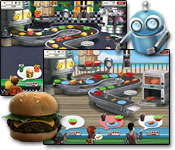
Review: Burger Shop 2

If you've been following the recent casual game releases like I have, you're probably feeling let down. It is obvious that the standards for new games have been lowered. I have tried several of them, looking for something to review for you, and I just can't find anything good enough to play all the way through. Fortunately, today I (finally) have something worth reviewing for you - a tasty little time management game from 2009: Burger Shop 2!

What I liked

  • Simple interface and controls
  • Variety of features
  • First-person perspective

What I didn't like

  • Not enough bonuses/upgrades
  • Music

Quick Plot

You wake up in a dumpster. Someone has screwed up your life and burger business, and you're going to track down the dirty fiend while rebuilding your burger empire!

Mechanics

Time Management: This game is a very simple, straightforward, multitasking, time management game. Here's how it works:
  1. Food and drink components come out of the BurgerTron machine on a conveyor belt.
  2. Customers come in asking for menu items.
  3. You pick up components off the conveyor belt and piece together the customers' orders.
Personally, I think the developers (GoBit) got off pretty easy here. They just had a clever programmer who came up with an algorithm for increasing difficulty (by means of more demanding customers, and an always increasing number of menu items). Then, they just throw 120 levels at you with 3 extra modes of play and their job is done. Genius. The game's mechanics are simple, but it keeps you playing. (Don't get me wrong, these developers are brilliant. I certainly couldn't code something like this. But I can see the game design for what it is.)
The interface. This is a standard breakfast level.
Your goal in the game is just to keep your customers happy by serving them quickly. As they wait, their patience meter goes down. If you serve all customers with 5-star happiness, you get a "Perfect" rating for that level. If you do pretty well, but don't satisfy every customer, you get "Expert." If you make too many customers ticked off, you get "Level Up," which just means you can go onto the next level, but with no honor. There are two reasons to push for Expert and Perfect.
  1. That is what makes the game fun and challenging.
  2. That is how you earn a number of trophies in the Hall of Fame (just your standard trophy room, as in other games - but this game has way more trophies than most games).
I was determined to get Perfect on every level, like I did with the Farm Frenzy games. But the last two restaurants were so stinkin' difficult, that I finally abandoned my Perfection Project in the name of finishing the game and getting it reviewed. But I did manage Perfect on every level before the final two restaurants, so that was cool. Also, you can replay any level, if you want to try for a better rating.
The stats screen after finishing a level.

Highlights

Interface and controls: Everything in the game is controlled with the mouse, as with most casual games. What's cool is how intuitive the controls are. Want to pick up 2 or 3 parts of the same food item? Just click them in succession and they automatically join up. Then, to deliver the food, you click it on the intended customer, or right-click, and the food will automatically deliver to the person who got there first. Need to get a waffle in the toaster quickly? Again, right-click the waffle, and in it goes.
It is very easy to keep track of what's going on. You never have more than 3 customers at once. Breakfast always has the same types of foods, as do lunch and dinner.
One of 15 pages of trophies. You certainly won't run out of things to work for!
Variety of features: The game gives you lots of variety within the simple framework. For example, you'll get the following:
  • 20 types of customers with different levels of patience, and different food preferences
  • 120 levels
  • 4 modes of play:
    • Story (this is the standard one)
    • Challenge
    • Expert
    • Relax
  • Multiple bonuses you can add to your restaurant, including
    • Freeze (temporarily freezes all patience meters)
    • Speed (makes all food machines, such as ice cream machines, produce instantly instead of slowly)
    • Traffic cone (puts a traffic cone at one customer seat, so only 2 customers can order at a time)
    • Lollipop (adds more lollipops to your tray - these help to raise patience meters)
    • Money (gives you extra money when you deliver the attached item), and
    • BurgerBot (he quickly fills customer orders for you)
The Ninja. This guy orders stuff from breakfast, lunch, and dinner menus at every meal. Check out how I captured the screenshot right as one ninja was appearing from out of nowhere. w00t!
Perspective: This is a small thing, but it can make a difference. Many time management games show your character running around throwing things into ovens or serving tables. I find that I actually like games where I don't see my character, but rather, I see everything from a first-person perspective. I like this perspective in the Farm Frenzy games as well.

Issues

Not enough extras: I already said that this game is brilliantly simple. The downside of this is that the developers can only go so far before the basic mechanic becomes repetitive. They mitigate this repetitiveness by increasing the challenge. That works well for a long time. But, by the end of the game, I was glad to be done. Those last couple of restaurants were so mentally and mouse-handingly exhausting that I just wanted to be done with them. They weren't quite as fun as the easier levels. And if the fun level diminishes, what's the point?
The level map, showing your road to all 8 restaurants.
What I think they should have done was to introduce more bonuses or upgrades. Why stop with BurgerBot 2? Why not 5 levels of BurgerBot sweetness? Or longer-lasting bonuses? Anything to help ease the pain of those later levels would be welcome. This would have really helped the game I think. The developers piled on the complications, but didn't match it with numerous upgrades. It's not a big problem, but it would have helped. Music: The music was fair. It got the job done, but the few short tracks were repetitive and nothing special. I am continually dissatisfied with the way developers skimp on music to save money. I think music is among the top few features that keep me playing a game, or bring me back for a second play in the future. I can say that the Burger Shop 2 music is something I'd gladly forget.
The Clown. Probably my favorite customer because he orders completely random and odd dishes.
Suitable for the family?

There is nothing here to offend. The visuals are cartoony and everything about the game is diner-ish and bright. My kids liked sitting with me and telling me what they thought I needed to do. My wife likes the game, too. Count this as one for the whole family.

The family man's final ruling

This is one of the best time management games I've played. I was almost done with the game when my computer ran into issues and I had to reinstall the OS, and somehow didn't transfer my save games for Burger Shop 2. I had to start at the beginning, and still had fun going all the way through the game again. It's a light game loaded with strange humor at every turn. I think the Challenge, Expert, and Relax modes really aren't valuable offerings from the developer. I think these modes were easy to program and so they threw them in so that it would look like you're getting a lot of bang for your buck, but really it's just more of the same, and not really fun to spend a lot of time on, in my opinion. But just playing through Story mode is a great quick-mousing experience. If you're a time management fan, make sure to get this one.
One of the more colorful customers in the game.

You'll like the game if...

  • You're a time management fan
  • You like restaurant-themed games
  • You like light, simple games

You won't like the game if...

  • You don't like fast-paced games
  • You get frustrated trying to keep track of multiple orders at once
My rating:

Wednesday, May 19, 2010

Review - Tiger Eye Part 1: Curse of the Riddle Box

When I was asked to review Tiger Eye Part I: Curse of the Riddle Box, and was told that it was designed by the same team who developed the Nancy Drew Dossier games, I jumped at the opportunity. I finished the game a few weeks ago and I've been eager to share my thoughts with you. Today, Big Fish has released the game on their site, and so I will now give you my official two cents! Well, maybe three.

What I liked

  • Mechanics
  • Music

What I didn't like

  • Story/Writing
  • Art
  • Themes/Content

Quick Plot

Solve a bunch of puzzles as you work at figuring out what kind of deadly conspiracy you've unwittingly gotten yourself into, with the help of a genie-like hulk from the past.

Mechanics

Puzzles: This game is very puzzly. Azada fans should be pleased. You'll play a wide variety of puzzles, none of them very difficult. I never needed to use a hint on a puzzle, and I don't think you will either. HOG: When you're not solving puzzles, you'll spend most of your time looking for hidden objects. Usually, the objects have a related theme like "weapons" or "vegetables." The hidden object scenes were probably the most difficult and time consuming portions of the game. It always comes down to that last one pesky thing you just aren't seeing. Minigames: The game will throw a number of minigames at you, including but not limited to
  • match 3
  • puzzle pieces
  • matching similar items, and
  • word games.
Puzzle: Hang the weapons.

Highlights

Mechanics: The three mechanics I mentioned above were actually my favorite thing about the game. It was the only thing that kept me from running away from the computer to barf (more about that later). The HOG scenes were pretty fun, and usually made some kind of sense with the scene. A lot of times, you are looking for pieces of things. I remember liking the scene where I had to find a bunch of scattered pieces for a bicycle in an alley. Usually, you have a list of scene objectives at the bottom of the screen. You can carry them out in any order. Sometimes, you need to solve certain puzzles. Other times, you may need to collect a number of items, or put something back together. My favorite element was the puzzles, simply because I enjoy puzzling my way through brainteasers and such. You'll get a broad variety of puzzles in this game. You're given very good instructions for solving the puzzles, which is nice. There's a drag-chain type match 3 game you'll have to play several times, and it's just boring. The graphics are mediocre and the whole thing feels like a waste of time (to me). Every time you complete scenes and tasks, your hint ball fills up. It fills pretty rapidly, too. Once you save up 50 hints, you unlock the game's bonus material. This was very easy to do, and the reward was minimal. I think it allowed me to play "Dress-up Hari" all I want! And maybe one or two other little features that I didn't bother to remember.
Music: This is the other element of the game that I was able to appreciate. While I think Matt Sayre's work for the Nancy Drew Dossier games was more interesting than what he produced here, it's still better than most casual game music on the market. My only beef is that I really think a composer with his talent should upgrade his sample libraries. He could be pumping out high quality orchestra music instead of the more synthy sound you'll hear in this game. And I'll give the audio team one more thumbs-up: the voice-over work is actually pretty good. Not great, but it's believable.
The main character: Delilah, or Dela for short.

Issues

Plot: This, of course, is merely opinion, but I thought the story was . . . lame. I know the game is based on a supposedly well-known fiction series, but it just didn't draw me in at all. In fact, it seemed amateurish to me. It's primarily a romance, with a significant amount of paranormal weaved in. The "romantic" scenes between the two main characters made me sick to my mental stomach. I wanted nothing more than to be done with the lengthy cutscenes, and get back to the puzzles. And I don't think it's just because I'm a man. I really think it's a poorly written and unbelievable romantic relationship. You can decide for yourself. Artwork: A huge chunk of the game plays out as cutscenes, which advance the story. These are done in the same manner as the Nancy Drew Dossier games. A series of hand-drawn images depict the story events, timed with the voice-over and music. The problem is, the artwork isn't very good compared to some of the high quality casual games on the market. When I looked at the concept art, I was surprised to see that it actually looks much better than the finished and colored art in the game. I'm not sure how this happens. But heck, who am I to complain? I know it probably took those artists hours upon hours to finish their work, and it's better than what I could do. On a more positive note, I will say that the artwork for the scene backdrops is actually pretty good. It's about the same quality as the Nancy Drew Dossier scenes.
Hari - Dela's burly dream man from the ancient past.
Themes/Content: This is my main gripe, which I'll develop more in the section below. To summarize: I wouldn't play this game with kids around. The themes and visuals are more "mature" (as they say) than most casual games I've played.

Suitable for the family?

This really depends on how you feel about exposed male buttocks. (And that's probably the last time I'll use the phrase "exposed male buttocks" in a review.) As is often the case with game companies, the developers seem to be pervs, as evidenced by the repeated shots of Dela in nothing but a towel. I found myself actually laughing as there was one scene after the next of Dela heading for the shower. And then, to top it off, Hari goes to take a bath, and then hastily runs out naked to save Dela. This is where the male buttocks come in. Yes - you are actually forced to behold Hari's full hand-drawn moon. Twice. *shudder* He spends a good chunk of time with his shirt off, too, so that you can admire his muscles. And, of course, so that Dela can hug him. And she's always wearing small, stomach-baring shirts for good measure. And if that weren't enough, you'll get a chance to see Dela's unmentionables scattered around her hotel room at one point. Gagging yet? If not, then maybe you will be, after a number of other random sexual innuendos pop up from time to time. I don't remember the exact words used now, but I know the language was also family-unfriendly. I don't remember if it ever got worse than "damn" or "hell" and the like, but I remember thinking, "Whoa! Back off, game!"

The family man's final ruling

I really, really wanted to like this game. I wanted to see what the Nancy Drew Dossier team would offer this time. But what makes the Nancy Drew games so fun was missing here. I think that missing element is primarily a good story, and of course the object-matching mechanic that is still unique to the Dossier games. Curse of the Riddle Box was like a drippy romance novel with a casual game forced into it. And even though I'm not a fan, I think the popular Twilight stories do a much better job with this romance/paranormal genre. But the weird thing is, despite the crummy story, I found myself interested enough to keep playing, not because of the story, but because the puzzles and other mechanics kept me playing, as any casual game should. If this game had been published by a high-polish developer like Big Fish Studios or PlayPond or MumboJumbo, and had a good story to go with it, this could have been a great game. As it is, I don't know whether or not to recommend it. I liked playing the game, mechanically, but I didn't like the game in terms of story and themes. In terms of fun alone, I would have rated it a solid 4. If only the puzzles were a little bit more challenging, I may have rated it higher. Will I play the next game in the series? Probably, but I might skip the cutscenes. (NOTE: I have made many references to the Nancy Drew Dossier games in this review. Let me make it clear that Curse of the Riddle Box was developed/published by PassionFruit Games, who, if I understand correctly, did the development work for Her Interactive on the Nancy Drew Dossier games. Her Interactive produces all of the Nancy Drew-themed games on the market. I think Her Interactive's involvement in the Dossier series is what made the games come out so good. That's my suspicion anyway.)
Dress-up Hari.

You'll like the game if...

  • You get shamelessly into mawkish romances
  • You like paranormal stories
  • You like the art and music style from the Nancy Drew Dossier games
  • You like lots of puzzles and hidden objects scenes

You won't like the game if...

  • You don't like sappy romance in your games
  • You only like top-notch graphics
  • You want thoroughly challenging puzzles
My rating:

Monday, May 10, 2010

Review - Penny Dreadfuls: Sweeney Todd

According to Wikipedia, a penny dreadful "was a type of British fiction publication in the 19th century that usually featured lurid serial stories appearing in parts over a number of weeks, each part costing a penny." It appears that developer Playpond is bringing some of these old serials to the casual game format. The first of these is the story of Sweeney Todd. This story has previously been made into a Broadway musical, and you'll get a good dose of this in the game's cut-scenes. Today, I'll tell you what I thought of this penny dreadful!

What I liked

  • Uncommonly high production quality
  • Sung interludes
  • Combination of HOG and adventure
  • Grading system

What I didn't like

  • Twisted story
  • Not enough puzzles

Quick Plot

Investigate some recent strange goings-on involving a priest, a young lady, a young man, a boy, a cook, and a barber.

Mechanics

HOG: You'll spend most of the game hunting for items in hidden objects scenes. They sparkle, so it's easy to locate them. The game plays out very much like Return to Ravenhearst or Dire Grove, mechanically.
Rooms like this will offer puzzles and hidden object scenes.
Inventory: As with other adventure games of this type, you will pick up a sizable collection of random items, which can be used in various places to help you advance. Puzzles: You'll get to solve a brain-teasing puzzle from time to time, but not frequently enough for puzzle enthusiasts like me.

Highlights

High production values: The Playpond team did what every developer should do: They polished and polished until everything was shiny. To be more specific, you can expect to get a return on your investment in the following areas:
  • Slick visuals
  • Orchestral music
  • Well-planned hidden object scenes
  • A plot to drive things
  • Correct English
  • Convincing voice-overs
  • Good game length (approximately 4+ hours)
I'll expand some of this below. Visuals: Boy, they sure made things look good. That was what initially drew me in. Fonts, scenes, and interface - all very professional looking. The designers gave adequate attention to these little nuances, making their game look better than most others on the casual market. Audio: Being a composer myself, I'm attentive to the goings on in the music section of the market. Right now, with the economy being what it is, developers are skimping on music. As you might guess, I think this is a bad idea. Many of my fondest gaming memories relate to the music and the mental images it can stir up. One way for a developer to cut music costs is to hire a less-experienced or less-talented composer. You can almost always tell when they do this. Another way to cut costs is to provide fewer minutes of music. In this game, you'll hear the same few tracks repeated frequently (that's how they cut costs), but I'm glad to say that they at least hired someone who knew what they were doing. The orchestral score is quite nice, and fits the mood of the game very well. It was pleasant accompaniment for the gaming experience. And to make things even better, they hired voice actors, and good ones at that. Not only will you hear speaking, but you also get singing in this game. That's right. It's a video game musical! Between plot segments, you watch montages of still images depicting the characters and the topics about which they sing. I thought this feature was unique, fresh, and I was glad to have it. One voice worth mentioning is the unseen British detective who accompanies you through the whole game, offering regular doses of commentary. I really liked this voice. It added to the immersion and gave a human element to the gameplay. Hidden objects scenes: I've been weary of HOGs for a while, as regular readers will know, but despite this fact, I found this game worth my time. Primarily, this is because of the production values I've been speaking of. But, I will say that if I have to play hidden objects scenes, I like them to be done they way they were done in this game. You have a very manageable list of objects to locate, and they look really cool when you find them. And, of course, it helps to have the British guy talking to you as you search. There are three more things worth noting.
  1. The HOG scenes will have you searching for a number of things that Americans won't be familiar with. Some of the terminology seems specific to English culture or history. So you might need to look a few things up.
  2. I found that the developers were very good about making sure that the thing you are looking for is obviously that thing. So you shouldn't have to do a bunch of "guess" clicking. A snake, for instance, will very obviously be a snake, once you look in the right place.
  3. The hints use a slow-refill system. Once you use a hint, you need to wait a while before using another.
One of many musical interludes.
Grading system: This game features a grading system. After each segment of the story, you are graded on
  • how long you took to finish that story arc
  • how accurate your searching was (it measures wrong clicks)
  • how many puzzles you solved (as opposed to skipping them), and
  • how many hints you used. (I think I'm right about this last one. Recall faculties...failing...)
This grading threw that bit of challenge in there for the serious gamer. If you want to "show your stuff," you can work at achieving a high grade. I got an A ("Nighthawk" ranking). I made it through without using any hints and I solved all of the puzzles. But, at one point, I forgot that it was measuring accuracy, so I was impatiently clicking on things for the heck of it - you know - "just in case" it's the thing I'm looking for.

Issues

Twisted story: I suppose I'm in the minority, but I'm just not into these twisted stories. The whole plot, which I won't spoil here, is just wrong on so many levels. It's just not the sort of thing I want in my mind. I'll talk more about this in the Family section further down. More puzzles please!: Looking back, I think I would have liked the game more if they had replaced some of the hidden object scenes with puzzles. The puzzles that were in the game were enjoyable, for sure. I just wish there were more of them!
Standard put-the-picture-back-together puzzle.

Suitable for the family?

Some of the imagery could definitely spook a little kid. The whole game takes place at night, and everything has a dark and ominous atmosphere, so this isn't a game I'll recommend as a family event. My wife stepped over to do some hidden object scenes with me, and enjoyed them, but I don't know if she'll ever play through on her own. She liked what she observed, which was very little. But, in case you're concerned with messed-up stories, I've spoiled some of the disturbing plot features below. Click and drag over the white text in the box to read it.
  • Sweeney Todd is a barber who ends up killing people with his razor, to take their valuables.
  • The baker woman is using the dead bodies to make meat pies, and business is doing well.
  • The aged priest character is corrupt, and he is determined to force young Johanna to marry him against her will.

The family man's final ruling

This game was fun. The whole production was well-done and kept me interested. The rainy atmosphere and dreary music have a way of pulling you into the story. There are hints for those who want them, and a high grade to work for, if you like a challenge. I would gladly exchange the story for one that isn't so disturbing, but they kept things pretty mild, for which I'm thankful. I recommend playing this game. The only thing that could have made it even better would be more puzzles instead of so many hidden object scenes. And, if you like bonus features, there is a Collector`s Edition, which costs more, but includes, according to Big Fish,
  • Exclusive hidden object scenes
  • Original puzzles to challenge and confound you
  • An interactive strategy guide
  • A new “theatre mode” to replay cut scenes and movies
  • Spectacular full orchestral soundtrack
Beautiful (and chilling) scenery at every turn.

You'll like the game if...

  • You like hidden object games
  • You like adventure games
  • You like inventory-based tasks
  • You like dark stories

You won't like the game if...

  • You don't like finding hidden objects
  • You want a bright and cheery game
My rating:

Sunday, April 11, 2010

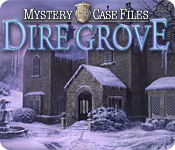
Review - Mystery Case Files: Dire Grove

At the end of 2006, Big Fish Studios released MCF: Ravenhearst, a super-creepy game that followed in the tradition of the other Mystery Case Files games. Then, in late 2008, Big Fish blew everyone's socks off with the even more twisted MCF: Return to Ravenhearst. This was the first game in its class, combining hidden objects with an adventure game, and doing it with a high quality that has hardly been matched ever since. (Read my review!) Then, just a year later, Big Fish released the next MCF game, MCF: Dire Grove, which turned out to be another game with the production style of Return to Ravenhearst, but with even more new features. This time around, as if it were the mid-90s golden age of adventure games, they included a series of live action cutscenes. So, did Dire Grove live up to the greatness of Return to Ravenhearst? Today I'm glad to (finally) give you my opinions! Read on!

What I liked

  • All-around high-quality production
  • Wonderful video sequences
  • Not as twisted as Return to Ravenhearst
  • Good balance of puzzles, inventory use, and hidden objects
  • A good ending

What I didn't like

  • Can't replay the ending...

Quick Plot

Figure out what happened to a group of students who came to Dire Grove to do research.

Mechanics

HOG: You'll play through an ample supply of hidden object scenes, as with the other MCF games. You'll even recognize familiar sound effects as you locate items. The hidden object scenes have just the right level of difficulty, as opposed to something overly difficult, like Luxor Adventures. You never have to find too many items, and they're never too hard to find. This is very welcome for those of us who prefer not to waste a whole lot of time poking around for hidden objects. Another plus in the HOG department is the fact that the scenes actually make some sense. Most of the random junk seems at home in its scene. And you always get to keep one of the items when you finish a hidden object scene, adding it to your inventory. As in many HOGs, you have a refillable hint meter.
Snow falls as you search the trunk. How'd the driver fit all that junk in there?
Inventory: As with many good adventure games, a high percentage of your obstacles will be inventory-related. You'll be regularly collecting various items and finding appropriate uses for them as you investigate your surroundings. Some of these items are acquired by clicking on an them in the normal environment, while others are gained by completing hidden object scenes. None of the uses are too obscure. You'll usually be able to guess at which object will work for a particular task, without too much trouble. Puzzles: You'll have to solve several puzzles, none of which are too difficult. I wouldn't have minded even more puzzles, and more complicated ones. But the ones you get are certainly fun.
Don't expect a warm stay at this snow-covered lodge.

Highlights

Live action cutscenes: I was an adventure game junky in the late 90s, when full motion video sequences were commonly showing up in games (the Tex Murphy series, Black Dahlia, Zork: Nemesis, and Gabriel Knight 2: The Beast Within, to name a few). So, when I found out that this game had professionally produced video clips with live actors, I was eager to get my in-game-cinematics fix. The game did not disappoint. These video sequences are excellent. The acting is very good, the locations are real, and the style is fitting for the game. These video clips are acquired by walking around and discovering camcorder tapes on the ground from time to time. Each tape unlocks a new video, and gives you a glimpse into the events leading up to your investigation. I offer a word of slight caution: some of the video clips are a tad unnerving. You won't be exposed to anything grisly or frightening, thankfully. But more than one clip is certainly spooky and somewhat panicky. I think the majority of people will get a kick out of these, but I wouldn't recommend watching the video clips with little kids around. Less disturbing: Whereas Return to Ravenhearst was like something out of a nightmare, Dire Grove is more like something out of the X-Files. The story in RtR left me wishing could repress it, while the story in Dire Grove is merely spooky and mysterious, in a way that allowed me to feel like my mind was safe. I'm sure you'll have at least one unsettling "WHAT THE HECK?!" moment in the game, but it's still comparatively mild, and rather fun. These surprise moments are likely to show up when you least expect them, so again, I advise you to avoid playing with small children nearby. Some of the content could easily disturb little minds. Satisfying ending: This is one thing you will rarely hear me say. But, in Dire Grove, they actually gave me an ending I could be satisfied with. Instead of the typical, "THE END. Thanks for playing.", the game ends with a nice video sequence to cap things off. My belief is that a game, or book, or movie should reward you for investing your time. Well, this game gives you the payoff. If only more developers would put some effort into good endings.

Issues

No replays: When I play a standard video game, I will frequently reload my last save, after completing the game. Then I'll play through the final sequence again just so I can watch the ending one more time. As you know, most casual games don't have saves. The downside to this is that, if you want to go back later to a particular part of the game, you can't. Dire Grove is such a game. After completing the game, I tried to load my game again, and it just stuck me back at the very beginning. This means you'd better catch EVERYTHING the first time through, because, honey, if you want to see the ending again, you're going to have to work for it! What can I say? I'm a sucker for good endings. But, this is my only grumble about the game.
Some weather vane, huh?

Suitable for the family?

I'm going to have to say no on this one. Most of the game is pretty harmless, and my kids did watch me play a good chunk of the game, but I just wouldn't want a child to be watching at one of those freakout moments. As I mentioned earlier, some of the stuff in this game would be disturbing to little kids. While this game isn't nearly as unsettling as Return to Ravenhearst, and the story is much classier, my wife indicated that she might not want to play this one, having seen and heard some of the scenes. For those of you who really want to know exactly what you'll encounter in this game, I have a spoiler window below. Highlight the white text within the window to read it.
  • One skeletal corpse, somewhat fake looking.
  • Ice-frozen, seemingly-possessed people who chant repeated phrases.
  • White, ghostly figures that appear and disappear in various rooms.
  • Panicked characters in the live action sequences, with jolty camera motions.

The family man's final ruling

This is one of the best casual games I've ever played. Big Fish Studios put a great deal of time and effort into making this a uniquely solid game. Attention to quality shows up everywhere from video production, to story, to graphics, to music, to puzzles. Every time I play a a rare gem like this, I sigh and wonder why so many mediocre games are released on the casual market. This game kept me interested the whole way through, and I loved the nicely-produced video sequences. All of the actors were good. And for those of you who like extras, there is a Collector's Edition, which costs more, but includes, according to Big Fish,
  • bonus 'Easter egg' levels and puzzles that reveal secrets related to both past and future Mystery Case Files episodes
  • integrated Deluxe Strategy Guide, and
  • extra video outtakes, concept art, screenshots, and desktop wallpapers.
If you like HOGs at all, get this game, especially if you like the integration of adventure and HOG. You won't regret it.

You'll like the game if...

  • You like hidden object games
  • You like adventure games
  • You like a good story
  • You like live-action cinematic cutscenes
  • You like stories involving ancient lore

You won't like the game if...

  • You don't like hidden object games
  • You don't want to be spooked from time to time
My rating:

Monday, April 5, 2010

Review - Youda Farmer

Youda Games, an uncommon casual game developer, never fails to put something unique and original on the market. Today, I review a Youda game from early 2009 - the aptly named pick-up-and-deliver game, Youda Farmer!

What I liked

  • Gorgeous graphics and animations
  • Original time-management concept

What I didn't like

  • Limited clicking speed
  • Lack of variety

Quick Plot

Develop your farm by picking up goods from various production buildings on your farm, then delivering the goods to town, and doing it quickly.

Mechanics

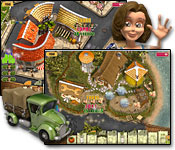
Time Management: This is a time management game. You're not working against a clock, but against orders that are pouring in from all over your farmland. After an order comes in, it slowly falls off the screen. Once it disappears, you've failed to complete that order. This happens both in the pick up stage, and in the deliver stage.
Your happy little delivery truck, which looks even cooler when upgraded.
Pick-Up and Deliver: The first part of each level has you driving your truck madly around the farm, picking up available goods as they are produced, fulfilling a quota of orders. Here's how this plays out:
  1. An order appears at the bottom of the screen (eggs, for example).
  2. You click on the order, which takes the screen the appropriate building (chicken coop, in our example).
  3. You grab the goods (a batch of eggs, in our example) and drag it to an empty shipping box.
  4. The truck picks up the goods the next time it swings by.
  5. A checkmark appears on the order, signifying that it has been picked up.
  6. You click the order before it disappears from the screen.
You'll end up with an entire row of mixed orders along the bottom of the screen, which is what provides a challenge. It becomes more complicated as the game goes on. The second part of each level has you delivering the goods to various shops in town. Shopkeepers will request the goods required for their business. When you deliver the goods, the shopkeepers make their products - typically, tasty-looking food dishes. These have no in-game effect. They just look cool.
This cute, mustached man is ready to serve up some hot meals using the goods you deliver!

Highlights

Graphics and Animations: The strange thing about Youda is that their games are never awesome. They seem to come up with unique concepts, and execute them with beautiful eye candy, but then they come up a short in terms of gameplay. This was true, for me, of both Youda Marina and Youda Sushi Chef. Youda Farmer doesn't seem to suffer from this oversight quite as much as the other games, which is why it's my favorite Youda game to date. As with the other games, the graphics and animations are excellent. The truck rumbles around the farm while the windmill spins and crops grow. Every order shows an amusing animation when you finish it. The characters are cute and cartoony, and the buildings in town are shiny and very pleasing to the eye with their colorful tile roofs. These high-quality graphics are what drew me into the game and kept me playing. Original Concept: I don't think I've ever seen a pick-up-and-deliver casual game quite like this. This game offered the challenge that time management fans enjoy, but with a fresh mechanic. And I really liked the farm theme. After you deliver enough goods, the townsfolk award you with trophies. Part of the fun is watching these trophies slowly piece together, so I won't spoil for you what they are. I also don't want to reveal what goods you'll be picking up in the game, but there ends up being a good variety by the end.
New and upgraded portions of the farm show up in color on your map in between levels.

Issues

Limited Clicking Speed: This bothered me a few times. Here I was, trying to rapidly click these orders off with my mousing finger, and the game wasn't even equipped to respond to my click rate. It's always weird when games cap the acceptable clicking rate. In a time management game, you don't want restraints like this. You don't want to click rapidly through 9 orders only to discover that 1 or 2 of them didn't register, and you have to re-click them. Lack of Variety: Some time management games really build in the features. You'll get mini games, or have interesting goals or trophies to work for. But in Youda Farmer, you do the same thing through the whole game. Pick up, deliver. Pick up, deliver. After a bunch of levels, the game is done. To be fair, I'll mention that you can buy upgrades in between levels. This makes your buildings produce goods faster, and offers other cool new elements to your farm. You can also change the color and capacity of your truck. You also get a bonus round every time you complete a trophy. This bonus round just sends you on a mad dash around the farm to pick up as many loose goods as you can manage. Fortunately for me, I liked the basic mechanic of the game, so I had fun until the end. But if you're looking for numerous features, you've come to the wrong place.
I love how the village buildings look. Incredibly detailed.

Suitable for the family?

Sure. The innocent farm theme is pleasant and can be enjoyed by anyone. My son liked watching the animations with me when orders were completed. In particular, we liked watching liquid goods slosh out of the glass. He also helped me to spot items on the bonus speed rounds. Still, unless your kids really like watching a truck drive around, they might not get into the game very much. My wife tried the game and wasn't all that eager to keep playing. It's just not her preferred flavor of time management (her favorite is Wedding Dash: Ready, Aim, Love).

The family man's final ruling

I have very little to say other than, this game is simple and fun. It's my favorite of the Youda Games that I've tried. The music fits, but doesn't offer anything special. I think most people will find the eye candy to be pleasing, if not stunning, for the casual games market. The game isn't all that long, but the length felt just right. But I have to wonder, when will the developer create Youda Man?
The windmill at the flour field. The blades are animated in the actual game.

You'll like the game if...

  • You like fast-clicking time management games
  • You like farm-themed games

You won't like the game if...

  • You want lots of variety
  • You don't like picking up and delivering goods
  • You get stressed out by time pressure
My rating:

Saturday, March 20, 2010

Treasure Seekers 3 and Alice in Wonderland - worth buying?

Two new hidden objects games came out over the last couple of days. It comes as no surprise, since the vast majority of new games are some variety of HOG. The new games are
  • Treasure Seekers: Follow the Ghosts, and
  • Alice in Wonderland.
I tested both games and found them to be fun, but not worth my money. I'll tell you why.

Treasure Seekers: Follow the Ghosts

As indicated by my review, I really enjoyed Treasure Seekers: Visions of Gold, and so did my kids. Then, I played Treasure Seekers: The Enchanted Canvases. I found it to be somewhat lacking. So my hopes were relatively high when I heard that people were pleased with Treasure Seekers: Follow the Ghosts Collector's Edition. The day before the release of the non-collector's edition, I downloaded it, eagerly anticipating another exciting treasure-seeking experience. Graphics: Still just as slick as ever. The graphics style is the same as the other Treasure Seekers games, as well as The Mystery of the Crystal Portal and The Spirit of Wandering: The Legend. Music: Good, as with the previous games. It provides a subtle backdrop that supports the mood of the scenery. Gameplay: Just like the other Treasure Seekers games, with a couple of exceptions, listed below.
  • When finding stuff from scene to scene, the cursor becomes visibly active when you mouse over an object that can be picked up. I was playing in casual mode, though, so this might not happen in the challenging mode. Some people will like this little bit of help, others won't.
  • The game now includes...*shudder*...standard hidden object scenes with a list of things to look for. The great thing about the Treasure Seekers games, before now, was the unique way they approached hidden objects. You had to find a certain item that required other items. Then you'd look around the scene and find the needed items. But now, they've included the basic "find this list of random stuff in the mess" scenes.
Fortunately, this game still includes a good number of puzzles and inventory-based objectives. That's the fun part for me. But, once again, the story has to do with trapped and restless ghosts. I'd really like to see Tommy and Nelly try their hand at something else. The writers over at Artogon seem obsessed with ghosts and the paranormal, since all of their games use this theme. Three more little gripes.
  • To avoid spoilers, I'll just say that some of the images in this game could be, I think, disturbing to little kids.
  • The puzzles I played were a little to easy for my taste.
  • The developers used the exact same character art from the previous game, but just slapped new clothes on them. I'd prefer more original material myself. But, I can't blame them. If they can make a little more money by doing the same old thing, then they have every right to do so.
Final Word: I know I sound pretty negative in my opinions of this game. That's because I have, admittedly, very high standards. I think most people will really like this game. My wife said she'd probably like it, having seen me play it. If you like HOGs, there's no question - you'll love this game, so go get it. My guess is that this game will give you everything you want from a HOG. I liked it, but just not enough to buy it. That's partly because, while the production quality is very good, I've grown weary of looking for hidden objects, so any new HOG is going to have to really blow my mind to get a glowing review from me. But for you HOG fans, I think this is the kid of game you'll love sinking your eyes into. I recommend this to anyone who isn't me. =D

Alice in Wonderland

Plot: You're investigating the case of the missing child, Alice. Graphics: Very nice. The scenes look good, and the stylistic choices of the artists were visually appealing. Music: A good reason to NOT play this game. Repetitive and boring, the music hinders the experience more than anything else. I suggest turning it off. Gameplay: From what I saw, the game was primarily a HOG with a little bit of "find the differences between the two pictures." There was nothing original here. Final Word: The game looked pretty and played smoothly. The atmosphere was nice, and finding objects was fun enough. Fans of HOGs will like it. But if you're after something original and immersive, this may not be the game for you. A great soundtrack quite possibly could have kept me playing longer.

Monday, March 15, 2010

Why settle for a measly old mansion? - a review of Be Rich

Did you play Build-a-lot? Let's just say you did. And let's say you wanted something similar, but different. That's where Be Rich comes in. Today I'll tell you what I thought of this money-grubbing real estate game!

What I liked

  • Freedom to choose building locations
  • Lots of levels
  • Graphics and interface
  • Upgrades

What I didn't like

  • Some very difficult expert goals
  • Limited selection of buildings

Quick Plot

Accomplish construction goals for cities all over the United States to successfully build up your real estate business.

Mechanics

Time Management: Each level has an Expert goal. To get the Expert ranking for a level, you have to finish it within a certain number of days. If you achieve the Expert goal, you get more prestige and money. If you don't achieve the Expert goal, you don't lose the level or anything. You simply don't get the minor benefits of Expert status. Building: This is a construction and money-making game. You'll build 3 types of buildings:
  • Houses
  • Buildings, and
  • Decorations.
Houses earn rent, Buildings are various types of shops and consumer attractions that earn extra income, and Decorations add value and attractiveness to Houses.
Mansion, Chateau, and Apartment Block - 3 high-end houses

Highlights

Freedom of Choice: In contrast to Build-a-lot, which forces you to build in designated lots, Be Rich instead gives you gridded areas. You can put a building anywhere on a gridded area, as long as it fits. This means that you get to decide exactly how your buildings are arranged in relation to each other, which affects how much money you can earn from a particular layout. Game Length: There are 40 levels in the standard game mode (Career Mode). This makes for a pretty good length. Then, to add in more gameplay, there is a Sandbox Mode. This gives you more of the same gameplay (levels with prescribed goals) but expands the territory beyond a single screen. In this mode, you can scroll across a broader territory. I haven't played all of the Sandbox levels, but there appear to be 6. And if you care to work for them, there are a number of trophies to earn, as in many time management games. These trophies appear on the map screen.
Level map and trophy room.
Graphics and Interface: The 2D graphics are colorful and detailed. Buttons are shiny, and buildings are cool looking. The interface is easy to use, so you won't find yourself confused. This game is nice to look at. The camera perspective is directly head on, with no angle, just like Hotel Mogul.
Upgrades: In a game that is otherwise fairly light on features, you are at least offered a bundle of upgrades. These can be purchased as you earn money for completing levels. Each upgrade adds a new building to your business empire, or adds a new section to your main office headquarters. These upgrades add bonuses to your gameplay, making levels easier. This shows up as things like quicker production and random rent checks popping up on houses.

Issues

Expert Rank: I often like to push for the
master goals in games like this. In the Farm Frenzy series, for example, I don't move onto the next level until I've achieved the Gold medal on the current level. In Be Rich, you earn Expert ranking on a level if you finish it in a certain number of days. For the first dozen or so levels, this was no problem. After that, it became a struggle. I got really close on a few levels, but most of the later levels had incredibly difficult Expert requirements. The bummer for me was that the game didn't compel me to work for it. Neither the gameplay nor the Expert reward were interesting or engaging enough to make me really desire that higher standard of achievement. It's my opinion that Expert goals in a game should offer valuable payoff for success. When I missed the Expert goal in this game, I just shrugged and moved on. Not Much Variety: I recently reviewed Coconut Queen. One of the great features of that game is the wide variety of buildings you can construct. But in Be Rich, you're limited to
  • 7 Houses
  • 5 Buildings, and
  • 5 Decorations.
And after a while, there were only about 3 House types I wanted to build. The various Buildings and Decorations still got frequent use though. A few more building options would have helped to keep my interest.
Your business empire. It grows visibly with each upgrade you buy.

Suitable for the family?

There's nothing either offensive or attractive to children in this game. The halflings watched me play sometimes, but usually asked me to switch to a different game.
Kids seem to gravitate to games with notable characters, and this game has none.

The family man's final ruling

The game is fun. It kept me playing until the end, and it was pleasant to look at. The music is mediocre and the English is poor and awkward at times. The story offers nothing meaningful, so I usually just clicked through the text. The best thing about the game is the freedom to choose where you place each building, so that you can make the building types interact for maximum profit. For instance, a movie theater benefits from having lots of Apartments next to it, and any building will earn more money if it's constructed on a premium lot. The worst thing about the game is the lack of variety or change. You're pretty much doing the same thing all game, and while it is fun, it didn't really shine in any way. I probably like it more than Build-a-lot, though. If you're going to try Be Rich, you might also want to try its sequel, which manages to boast an even more hedonistic title: Be Richer.
A standard level. This happens to be a wintery one. The stars indicate premium lots, which earn you more money.

You'll like the game if...

  • You like real estate and building games
  • You want more freedom of layout than Build-a-Lot offers

You won't like the game if...

  • You want lots of variety, features, and extras
My rating: